Commonwealth War Graves in Iraq
6 Squadron RAF, WW1 Aviation and My Books
Search Results
151 results found with an empty search
- 6 Squadron | Graham Price | Steve Buster Johnson
Brief biography of Lieutenant Graham price, 6 Squadron Royal Flying Corps, who served with the squadron from November 1915 until his death in March 1916 Lieutenant Graham Price - 6 Squadron Royal Air Force The eldest of seven children, three boys and four girls, Graham Price was born in 1888 to James and Martha Price. He attended the Elmfield College (a Primitive Methodist College) in York from 1901 to 1904, during which time he was an active member of the Young People’s Christian Endeavour Society. After leaving college, he developed a reputation as a quiet and conscientious man in business affairs, displaying both courtesy and gentlemanly manners. Over the next ten years, Graham distinguished himself as a competitive trials rider, winning numerous medals and even receiving offers from leading manufacturers to ride overseas. In 1914 alone, he won two gold medals for long-distance races, riding his 5 hp Bat motorcycle. When war was declared, Graham enlisted as a despatch rider in the Royal Engineers and was sent overseas in early October 1914 as part of the British Expeditionary Force. For the next twelve months, Graham survived all manner of dangers, from taking part in the retreat at Mons to being affected by gas in the trenches when the Germans overran Hill 60. Holding the rank of corporal, he eventually became the oldest despatch rider in IV Division HQ and the last of the original seventeen motorcyclists who joined IV Division. To give an example of how dangerous it was to be a despatch rider during the Great War, delivering messages across terrain that was constantly being shelled and almost unrecognisable, in the month of May 1915, Graham required four replacement motorcycles in a single week as well as losing five of his fellow despatch riders who were killed over a ten day period. Several times during 1915, Graham requested to be considered for a commission in the Royal Flying Corps as an observer, but with many changes in leadership within IV Division, it wasn’t until the end of September that he was interviewed by Major Gordon S Shephard, the commanding officer of 6 Squadron. Having made a positive impression on Major Shephard, Corporal Graham Price was immediately sent back to England for observer training. Graham Price returned to the Western Front on the 11th November 1915 as a 2nd Lieutenant on probation, joining 6 Squadron at Abeele as a junior observer in ‘C’ Flight to complete the active service part of his training and be awarded the ‘single wing’, of a fully-qualified observer. Such was his proficiency that within the first month at 6 Squadron, Graham had flown on numerous missions in FE2a two-seater fighters and later in several BE2c reconnaissance / bombers. It was in a BE2c on the 6th December 1915 that Graham Price was the first observer to use wireless for transmitting messages to the ground in helping the allied artillery range on to enemy targets. Graham’s skills as an observer and his effectiveness in firing a Lewis machine gun in action quickly earned him the reputation as being a formidable opponent to any German scout pilot wishing to interfere with his mission and he created a record in the squadron by participating in fifteen aerial engagements with the enemy. The importance of his skills were quickly recognised and immediately prior to Christmas 1915 he was transferred to ‘A’ Flight to replace the senior observer who had been injured in a flying accident. In his new role, Graham became responsible for training new observers as well as taking part in numerous artillery observation and contact patrol missions with several different pilots. On the 7th February, he was promoted to Flying Officer, giving him equal status and pay to that of a pilot while he waited impatiently to be sent home to England for pilot training. However, due to an extreme shortage of experienced observers at that time, he was informed by his commanding officer, Major Reginald Mills, that his request to become a pilot would not be actioned for at least three months. Just before noon on the 9th March 1916, four weeks before he was due to go home on leave, Graham Price left on an artillery observation mission from the snow-covered aerodrome at Abeele. His pilot that day was Lt George Fincham, a man he knew well and a very experienced pilot he had crewed as an observer on many occasions, including his very first offensive mission as a probationer back in December 1915. George Fincham had qualified as a pilot in August 1915 and 6 Squadron was his first and only posting. Mid-way through the mission, whilst flying over Kruisstraat at eight thousand feet, their BE2c Serial No: 4181 was attacked by a Fokker ‘Eindecker’ scout. After a fierce aerial battle that lasted fifteen minutes, Graham Price was struck in the chest by enemy bullets and died instantly. George Fincham was also wounded and, with the aircraft badly damaged, he had no choice but to dive towards the ground in an attempt to escape from the enemy scout. From eyewitness accounts, the aircraft crashed close to a British battery to the north of Dickebusch Lake and was completely destroyed by fire, with the bodies of both men still inside the wreckage. Graham Price and George Fincham, aged twenty-eight and twenty-five respectively, were taken to the No: 10 Casualty Clearing Station at Remi Siding and then buried side by side in the nearby Lijssenthoek Military Cemetery, three miles from Abeele aerodrome. As a poignant post-script, in a letter to his father a month before his death, Graham Price wrote: “I anticipate at any rate another two years of war and very much doubt that both of us [Graham’s brother Bert was a serving officer in the British army] will come through; so if by any chance something should happen to one of us, you must not take it to heart too much and grieve, but I feel sure you would both bear it bravely and be proud to have given a son to the Country.” The following is the letter of condolence written by the commanding officer of 6 Squadron, Major Reginald Mills, to Graham Price’s father. My latest book, "Rising from the Flanders Mud " is the true life story of Graham Price Extract from ‘For God, England & Ethel’ © Steve Buster Johnson 2009 Three quarters of the way to the target and once again caught in the mid of enemy anti-aircraft fire, Graham Price had a clear view of the enemy gun emplacement. He raised his right arm as a signal to his pilot who once again turned the aircraft around. As soon as they were on their way back to the battery they were working with, Graham took hold of the Morse key and transmitted the ‘G’ firing code, repeating it several times. Watching the end howitzer, a puff of smoke erupted from the gun’s barrel after a few seconds and he turned around in his seat to look towards the target, some four thousand yards to the east. At his signal, George Fincham turned the BE2c to the left, steering the aircraft across the path of the shell and towards the target. As he waited for the shell to hit the ground, Graham counted off the seconds with the aid of the pocket watch strapped to his arm. He had reached a count of thirty two when the machine was pushed violently downwards as if hit by a huge invisible force, rocking from side to side as the pilot struggled to bring it back on to an even keel. Eight seconds later an explosion erupted on the ground two miles ahead, at precisely the correct range but slightly to the left of the target. A huge plume of earth rose into the sky, creating a ripple in the ground mist that spread out from the explosion like a stone dropped in still water. “We cut that a bit fine,” Graham shouted. “That must have been the shell coming down over our heads. Next time we’d better go closer to the target and a little more off the line of fire.” “Keep your eyes on the explosion,” his pilot shouted back. “I’ll fly towards the target a little longer this time so you can get an accurate correction.” The shock wave of the near miss had dislodged the disc from his map, so Graham had to reposition it in order to work out the appropriate correction. After estimating where the shell had struck, he wrote ‘B12’ on the notepad strapped to his other leg, signifying that the shell had burst between fifty and one hundred yards to the north, or left, of the target. Graham was about to instruct his pilot to turn the machine around when he was knocked sideways by the force of a nearby explosion. Looking over the side he spotted several large holes in the fabric of the lower port plane, each hole ragged and with burnt edges. The aircraft was rocked by a second explosion, though this time the shell burst was fifty yards to the left and slightly behind their position. He heard a slap on the side of the cockpit and turned around to face the pilot. “I think we’re through the worst of it, Graham. Have you worked out the correction?” “Yes, I have. You can make the turn now.” The aircraft lurched again as yet another anti-aircraft shell exploded nearby. Before Graham could brace himself, he was pushed down in his seat, experiencing three times the force of gravity as George pulled the aircraft into a tight climbing turn to the right, before pointing the machine back towards the safety of the lines. When the German anti-aircraft guns stopped firing, Graham realised they were safe until the next run. Peering over the side he tried to gauge the severity of the wing damage. Though a significant portion of fabric was missing from the lower wing, as far as he could tell no bracing or control wires had been broken. “It looks worse than it is, George. I can’t see any broken wires.” “All right, Graham, let’s press on. I’ll run back towards the battery whilst you send them the correction. Let me know when you’ve sent the message so I can be ready to make the turn as soon as the gun fires again. That way we can save time.” “I’ve just sent the signal so it won’t be long now.” The aircraft was at about the same position where it had almost been struck by the first shell when the howitzer fired again. “OK, I can see the smoke, George. Let’s go back into Hunland.” This time the pilot made a hard turn to starboard with the wings of the BE2c becoming almost vertical. Counting out the seconds, Graham was forced back in his seat, the wooden shelf holding the telegraph key pressing painfully into his right arm as he twisted around to keep the target in sight. After a count of forty one, he spotted another explosion on the ground. This time it was more than just a single column of earth that was thrown into the sky. The initial shell blast was followed by yet more explosions, each one larger than the first, and a huge cloud of black smoke rose hundreds of feet into the air. “By jove, we’ve scored a direct hit in two,” he shouted excitedly. “Just look at those fireworks!” Coming within range of the German anti-aircraft guns again, the aircraft was buffeted by a series of blasts. Pieces of fragmented shell whizzed through the air all around, some of them penetrating the left side of the fuselage and burning holes in the fabric covering. “Don’t wait around any longer, George. Head back towards the battery and I’ll transmit the ‘OK’ signal on the way. They won’t need to fire again on these coordinates.” “Rightio. Hold on to your horses while I get us out of here.” It took another hour for the two airmen to successfully range the batteries on to the next two targets though both targets were destroyed without further mishap. The third objective proved the most difficult. Marked as a supply dump and positioned next to a crossroads it should have been an easy target, but the intensity of the anti- aircraft gunfire in the area made George unwilling to risk taking the aircraft as close as his observer would have liked. It took five aiming corrections before the four friendly howitzers obliterated the supply dump as well as a large section of the crossroads. With one remaining target, George was anxious to complete the mission and return to Abeele, as they had been in the air for two and a half hours and were running low on fuel. He cut back the throttle to reduce the speed and wind noise so that he could more easily communicate with his observer. “We must press on as we’re low on petrol and I don’t want to risk having to land on the wrong side of the lines. The holes in the wing aren’t helping either.” “I’ve not seen our escorts for a while, George. Would you climb higher on the way back to the battery so I can get a better look at what’s around?” “I’ll see what I can do, but I can’t promise anything. I’m not sure how badly we’re damaged and I don’t want to chance my arm.” “Do what’s best, you’re the pilot. I’m transmitting to say we’re ready for the final target. Tell me if you want to call it a day and I’ll send them the CI instead.” “Let’s try at least one run. We’re right over Zillebeke so it won’t take us long to get back to the battery from here. The lookout can probably see us already if he’s using his binoculars.” “Our time’s almost up so we might even overlap with the machine that’s next up. Let me test the Lewis before I send the message.” “Right you are, Graham.” With the aircraft in a steady climb on a direct heading towards the battery, Graham stowed his maps and unbuckled his waist belt before turning around and kneeling on his seat so that he could make ready the Lewis machine gun. Having checked the magazine, he swung the gun through the safe arc of fire and fired off a dozen practice rounds. He smiled at his friend, though he doubted the pilot could see his expression behind the large goggles and close-fitting balaclava that they were both wearing. Sitting in the rear cockpit, George Fincham instinctively flinched at the sound of the machine gun, the muzzle only inches from his face, and he waited until it had stopped before he tried to say anything. “I’ll keep an eye out while you send your message, Graham. There’s a speck in the distance, about two miles away. It’s a lot higher than we are and it’s coming towards us from the west, so I’d put my money on it being the machine that’s relieving us.” “I hope they’ll be as lucky as we’ve been today.” “We’re not home yet,” George replied, but his words were lost in the wind. The speck grew closer, decreasing in height as it approached. Within a few seconds what had at first appeared as a small black dot quickly grew into the shape of an aircraft. George looked intently at the oncoming machine, its image blurred by the single spinning propeller. Lowering the nose of the BE2 momentarily to get a clearer view, he sensed there was something odd about the silhouette. It only took him a few moments to identify the aircraft as a monoplane. Knowing of no such allied aircraft operating in the area, he quickly realised that it had to be a Fokker scout and that they were directly in its path, unable to return fire as their only weapon was pointing in the opposite direction. At a range of five hundred yards the enemy aircraft was attacking in a steep dive. As it came closer, he saw flashes of light erupt from the muzzle of the centrally mounted machine gun as the German pilot came at them. “Eindecker!” he screamed as he pushed the throttle wide open. Forcing the aircraft into a violent left hand turn, he tried to manoeuvre into a position where his observer would be able to fire upon their attacker. Without warning, the steep turn developed into a spiral dive as the damaged fabric tore away from the wing ribs. He struggled to regain control and gradually brought the aircraft out of the dive. Looking around to check their position he discovered that they were flying in an easterly direction, back towards the German lines. With the aircraft finally back under control, he gradually increased the throttle so that he could gain height yet minimise the strain on the damaged wing surface. “I think he overshot us,” George shouted into the slipstream, hoping his observer would hear him. “See if you can spot him as I turn back towards our lines. With God’s help we can still make it home, Graham.” This time he banked the machine in the opposite direction. He briefly looked out over the side of the cockpit to get his bearings and saw the outline of Zillebeke Lake come into view immediately below. Knowing they were only minutes away from Abeele, he quickly reassured himself that there should be sufficient fuel to make it home, provided the wing held out. His thoughts were interrupted by the deafening sound of his observer’s Lewis gun. He quickly glanced behind but could not see anything. Between bursts of gunfire his observer was trying to tell him something, but the only words he could understand were, ‘Immelmann turn’. These two words were enough for George to realise that they were in grave danger. The enemy pilot must have zoomed up into a loop, rolled his machine over at the top of the loop and was now in a perfect position for making another attack, but this time from behind. Having already crossed over the British lines, there was still a good chance the enemy would break off the attack and leave them in peace. The firing stopped and he watched as Graham removed the spent drum of ammunition and dropped it on to the floor the cockpit. Just as the observer reached out over the side to take a new drum of ammunition from the storage rack, George felt a searing pain in his back and left arm. At exactly the same moment, he noticed three blood-encircled bullet holes appear in the Triplex windscreen directly in front of him and his observer jerk backwards as if tackled by an invisible rugby opponent, his hands simultaneously letting go of the Lewis gun and the new drum of ammunition. Caught in the slipstream, the heavy drum scraped down the side of the fuselage before striking the tailplane and punching a neat hole through the vertical fin. Unable to reach into the front cockpit, George watched as his observer slid to the floor with arms outstretched, the back of his head striking the instrument panel as he fell. The aircraft slowed as if it had encountered a sudden head wind and with no-one manning it, the Lewis gun spun around in random circular movements as the aeroplane faltered in the sky. Smoke began to pour out of the engine and the whole machine vibrated violently as pieces of wood flew off the propeller, striking the fuselage in a hailstorm of splinters. “I’m shutting it down, Graham,” George shouted, praying that his friend was still alive. Switching off the electrics, he looked for a suitable place to land. “The engine’s been hit and the propeller’s shattered, so there’s no chance of reaching the airfield I’m afraid. Hold on old chap, I’ll do my best for you.” George grappled with the controls using his right hand and both feet, his left arm hanging useless by his side. The control stick felt warm and sticky in his grasp. With all the strength he could muster, he tried to maintain an even descent in order to give them at least a chance of making a successful landing. As he did so he fought to remain conscious, but all he wanted to do was close his eyes. He had no idea where the enemy scout was and didn’t really care, knowing that he had no strength to turn around in his seat even if he wanted to. Waves of pain and nausea swept over him and every time he relaxed his grip on the controls, his peripheral vision closed in so that it seemed as if he was looking through the wrong end of a telescope. Somehow the shattered machine held together, testimony to its designers, as it descended in tight circles towards a large field where cows were grazing. It left behind it a trail of dense grey smoke the shape of a giant corkscrew, visible all around to hundreds of allied soldiers who had watched the conflict from the relative safety of their trenches with a detached sense of interest and sympathy. Using the last of his strength, George pulled back on the control stick as the ground rushed towards them. “Almost there Graham, almost there,” he murmured. The stricken machine slowly came out of the dive, stalled momentarily in mid-air before rolling over on to its back and plunging vertically into the ground.
- Messines | Klein Zillebeke Sth | Six Sqdn | Steve Buster Johnson
Six Squadron aerial reconnaissance photos at I.36.D, south of Klein-Zillebeke, the first before the Battle of Messines and the second on the 11th June 1917. 6 Squadron Aerial Photos - South of Klein Zillebeke The two photographs on Page 4 were taken by an RE8 of 6 Squadron, part of its photo reconnaissance operations over the Western Front during WW1. Both photographs were taken by an RE8 of 6 Squadron over a section south of Klein-Zillebeke, as defined by the mapping coordinates 28. I. 36. D , an area measuring 500 yards square. The first photograph was taken on the 17th March 1917 and the second on the 11th June 1917, 4 days after the 19 mines were detonated beneath the German lines along the Messines ridge.
- RAF Hinaidi | Brief History | stevebusterjohnson
RAF Hinaidi lasted from its foundation in 1921 until the cantonment and all it contained (excluding the land upon which the Hinaidi RAF Peace Cemetery stood) was handed over to the Iraqi Government in 1937 RAF Hinaidi (and cemetery) - A Brief History In April 1922, the 'powers that be’ in the Army and British Government (Trenchard and Winston Churchill) decided to take the pressure off the British Army in Iraq (which was having great difficulty in finding and expelling invading Arab/Kurdish rebels) by establishing a number of Armoured Car Companies to work closely with the RAF bomber/reconnaissance squadrons in driving the rebels back across the border. Wing Commander William Harold Primrose was tasked with the job of setting up the Armoured Car Companies in Iraq, requiring close to 1,000 RAF personnel (called ‘The Armoured Car Details’) to be trained in England at Manston under Primrose’s command before being transported by ship to Iraq. The troopship the Braemar Castle, left England on the 14th September 1922 and arrived at Basra a month later. Upon arrival at the port of Basra in southern Iraq in the first week of November 1922, the men and equipment disembarked, the officers (including Wg Cdr Primrose) travelling the 330 miles from Basra to Baghdad by night sleeper, a train providing all the creature comforts and food. The NCOs and 'other ranks' entrained at Shaibah Junction, 10 miles south-west of Basra, on very primitive rolling stock, with each car labelled, “4 horses or 16 men”! Not only was it uncomfortable, the men had to arrange for their own provisions for the long and slow journey. After further training at RAF Hinaidi, the men were allocated to an Armoured Car Squadron or the Armoured Car HQ. In October 1922, the Royal Air Force took over command and control from the British Army of all British Forces in Iraq. This decision was made on the grounds that it would be far cheaper to patrol the region from the air, by increasing the number of Royal Air Force squadrons and Armoured Car Companies now under its direct control instead of relying purely on ground troops to maintain peace in the region. Such a radical change in the Royal Air Force’s organisation meant that the new infrastructure required would far exceed the capabilities of the RAF base at Baghdad West. To allow for growth into the future, all operationms were moved to RAF Hinaidi, an area of flat land seven miles east of Baghdad West, on the east bank of the River Tigris. RAF Hinaidi had already been set up as a new base for the RAF in late 1921. To protect the low-lying land from flooding, a bund was constructed around the perimeter of the cantonment, eight and a quarter miles in length and encompassing an area of approximately 2,500 acres. Though construction would take several years to complete, No 1 Squadron, the first of many, moved into its new home in April 1921. In late 1922 the Armoured Car Companies and their HQ moved to an area on the western side of the cantonment, close to the RAF General Hospital. Over the sixteen year operational life of RAF Hinaidi, a total of seven RAF Squadrons were based there at one time or another, as were the Armoured Car Companies, the Iraqi Levies, RAF contractors and civilian employees. At its peak, the population of RAF Hinaidi reached 9,000 and the facilities provided for those who worked and lived there came to include three clubs (two for officers), playing fields, a swimming pool, tennis courts, squash courts, a golf course, a ‘point to point’ course, a large stadium, three churches, a college with library and a post office. The final piece of the jigsaw in bringing every organisational Unit into RAF Hinaidi was in December 1928 when the Air Headquarters and all its staff was moved from the old British Residency in the centre of Baghdad into one block of the RAF General Hospital, which had been built along the western perimeter of the cantonment on the bank of the River Tigris. The role of the squadrons based at Hinaidi was varied, encompassing all aspects of reconnaissance, bombing, ground attack in cooperation with Armoured Car Companies and transportation (e.g. people, equipment, mail). Actions, to name a few, included the repelling of Turkish forces from Kurdistan, restoring local order against Sheikh Mahmond of Sulaimania and Ahmad of Barzan and the evacuation of Karbul. Flying in a desert region came at great risk to the pilots and gunners, with sand causing frequent engine failure and extreme heat buckling wings and causing fabric glue to fail. As many men died as a result of accidental crashes as would in battle. Between December 1921 and December 1937, three hundred servicemen and RAF contractors lost their lives and were buried in the Hinaidi RAF Peace Cemetery (later renamed the Ma’Asker Al Raschid RAF Cemetery but now known simply as the Al-Rasheed Cemetery). Their deaths were caused by a variety of events – in action, by accident, through illness and in a few instances, as a result of suicide or murder. Serving in the unfamiliar, harsh and unrelenting climate of Iraq was not easy, especially in the early nineteen-twenties when facilities provided at Hinaidi were very basic. By the time ownership of the RAF Hinaidi cantonment and most of its infrastructure was handed over to the Iraqi Government in February 1938, the RAF’s centre of operations in Iraq had already been moved to a new site at Habbaniya, fifty miles to the west of Baghdad. However, it was stipulated in the handover document that the cemetery grounds would remain the property of the British Ministry of Defence and maintained in perpetuity by the Imperial War Graves Commission. Many of the graves at Hinaidi are for decorated WW1 veterans from the Royal Air Force and the British Army as well as for diplomats and political officers, the most prominent diplomat being Brigadier-General Sir Gilbert Clayton, British High Commissioner to Iraq at the time of his death in September 1929. Sir Gilbert was instrumental in Iraq being accepted into the League of Nations, though he did not live to see the results of his achievements. Of the forty-six Royal Air Force pilots buried at Hinaidi, twenty were WW1 veterans, sharing between them forty-two medals and citations. Four of the decorated veterans had achieved ‘ace’ status during their WW1 service prior to re-joining the peacetime Royal Air Force, often at a significantly lower rank. Two had once commanded their own squadrons. Among the senior officers buried at Hinaidi were two commanding officers (Squadron Leaders) of the No 6 Armoured Car Company as well as a Station Commander and a Wing Commander from the RAF HQ. During the construction of the perimeter wall at the Ma'Asker al Raschid Cemetery, photographs were taken of every headstone found on the cemetery grounds. A few headstones were in perfect condition and more or less in their original setting, whilst others, though complete, had been knocked over and moved to other parts of the cemetery. There were also a large number of damaged and incomplete headstones, with some fragments too small to be able to match the grave to which they belonged. Nevertheless, 77 (seventy-seven) of the original 300 (three hundred) headstones were able to be identified. It is possible that this number may increase, as there are many more headstone fragments buried under the rubble, especially as the south-east corner of the cemetery has in recent years been used as a makeshift access road to the nearby Al-Rasheed Air Base. The recent erection of the cemetery wall and security gate, coupled with Commonwealth War Graves signage, has hopefully halted the appalling deterioration of the cemetery. This project represents a huge step towards ensuring the ongoing security of the bodies of the men and women buried at Ma'Asker. However, in order to afford the men and women who gave their lives for their Country the honour and respect they deserve, more needs to be done. With details now available as to the name, service unit and grave location of every man, woman (and an eight-month-old baby girl) buried at Al-Rasheed, it is feasible to have all three hundred headstones re-made by the CWGC in Europe and erected at Al-Rasheed as time, resources and political climate allowing. All it requires is funding and a little bit of co-operation.
- Ma'asker Al Raschid RAF Cemetery | Headstone Photos | stevebusterjohnson
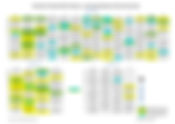
Interactive schematic diagram of the Ma'Asker Al Raschid RAF Cemetery showing names of the 300 burials and links to photographs of surviving 77 headstones Interactive Grave Diagram - Ma'Asker Al Raschid RAF Cemetery The diagram below gives the name and grave location for each of the 300 burials at the Ma'Asker Al Raschid RAF cemetery (formerly the Hinaidi RAF Peace Cemetery). The names displayed in pale blue represent the seventy-seven (77) surviving headstones (complete, damaged or fragmented) that I have been able to identify from hundreds of photographs taken at the cemetery between 2021 and October 2025. Clicking on one of the blue names will link you to a present-day photograph of the headstone. Alternatively, you can view all seventy-seven headstone images . If you would like to search for a name that may be associated with a surviving headstone, the full list appears in alphabetical order on this page below the cemetery layout. The background image for this page of my website (not visible for mobile phone viewers) shows what the cemetery looked like in 1935, viewed from the grave of Sergeant William S Woods of the RAF Aircraft Depot (Plot 3 Row M Grave 1( towards the north-west corner of Plot 3. Anchor 1
- Six Squadron | Lt Geoffrey Cato | stevebusterjohnson
This page provides a brief biography of Lieutenant Geoffrey Cato, 6 Squadron Royal Air Force, using WW1 service record information and many other sources Lt Geoffrey Maidens Walter Gaven Cato - 6 Squadron Royal Air Force Geoffrey Maidens Walter Gaven Cato was born in October 1897 at Cape Runaway (a name given to the area by Captain Cook during his first voyage of discovery in 1769 after he frightened off hostile Maori natives by firing one of his ship’s canon), a tiny coastal town on the eastern tip of New Zealand’s north island. At the age of eighteen Geoffrey sailed to England and straightaway enlisted in the Royal Flying Corps. After three months of pilot training he was commissioned as a 2nd Lieutenant, served two short postings with reserve squadrons in England before being sent overseas to join 6 Squadron on the Western Front. He arrived at Abeele on the 19th June 1917, five days after the short but brutal Battle of Messines in which the squadron played an important but dangerous role, with casualties totalling seven men killed, one man taken as POW and a further five men injured. Despite these losses, moral on the squadron was high, as the previous day saw a change in commanding officers as well as the shooting down of a German Albatros scout from Manfred von Richthofen’s ‘Flying Circus’ by two of 6 Squadron’s RE8s after they were attacked by eight enemy aircraft on the way home from a bombing mission. With a shortage of pilots and serviceable aircraft, Geoffrey Cato was sent into action after only two familiarisation flights behind the lines. Though nothing is known of Lt Cato’s missions, it is evident from two surviving incident reports that he quickly became a skilled pilot, as twice he successfully crash-landed a crippled RE8 without injuring himself or his observer. The first incident took place on the 3rd August 1917 when his aircraft, RE8 Serial No: ?????, was struck by anti-aircraft fire and the second, a month later on the 6th September, after the engine of his RE8 Serial No: A4243 failed when he was on an Artillery Observation mission over Zillebeke Lake. Ironically, on the 6th November 1917, Lt Cato and his observer Lt Robert Richardson were both drowned as a result of a flying accident in which their RE8, Serial No: A3643 was wrecked. Having been sent out on a contact patrol in the worst of weather conditions that offered little prospect of them being able to spot any allied troops on the ground, they were returning to the aerodrome at Abeele when their aircraft was seen by observers to make an attack on a practice target in the lake at Dickebusch, only a few miles from Abeele. According to the eyewitnesses, the wings of the RE8 folded up when the machine came out of a dive and the aircraft broke up and crashed into the shallow waters of the lake’s shoreline. Sadly, though both men survived the impact, they drowned before help could reach them. In another twist of fate, Lt Richardson was due to go on leave later that day and had arranged to swap places with another observer who had previously flown with Lt Cato and was looking for more experience. However, their new flight commander, a recently-promoted captain who was only eighteen years old and unwilling to break the rules, refused to agree to the swap. After a funeral service conducted by the squadron, the two officers were buried side by side in the Lijssenthoek cemetery, a short carriage ride from Abeele aerodrome. By the end of the war, a total of thirty-one men from 6 Squadron would share the same final resting place, their names honoured for ever amongst the other ten thousand seven hundred and fifty three headstones erected at Lijssenthoek, the largest military cemetery containing Royal Air Force casualties in the whole of the Ypres region.
- 6 Squadron | Abeele Aerodrome 2 | WW1 | Steve Buster Johnson
Plan of Abeele aerodrome (home of 6 Squadron) drawn in April 1918 on map of Proven and the other three Poperinge aerodromes Abeele Aerodrome (1918) The map shown below is an extract from a larger map of the Proven region of the Western Front which shows (as well as many other buildings) the location and shape of the four allied aerodromes close to Poperinge as well as the buildings on each aerodrome. You can see that the main runway at Abeele was modified between 1917 and 1918 by the addition of the field to the west, along the road that formed the border between Belgium and France. This made up for the decision in 1917 to limit aircraft operations to the west of the dividing north/south laneway. 6 Squadron operated from here during WW1, from April 1915 until November 1917
- 6 Squadron | Royal Air Force Casualty | Cecil Coxe | Steve Buster Johnson
This page provides a brief biography of 2nd Lieutenant cecil H Coxe, 6 Squadron Royal Air Force, using WW1 service record information and many other sources 2Lt Cecil H Coxe - 6 Squadron Royal Air Force The story of 2nd Lt Cecil H Coxe is an interesting one. He gained his commission as a pilot (temporary 2nd Lt Special Reserve on probation) at the tender age of 18 on 08/12/1915 and was confirmed in his rank on the 15/05/1916. I'm not sure when he was posted to 6 Squadron in Abeele but he didn't last long enough for an entry to be made in the squadron's register of officers. His death was on 1st July 1916. Despite his short time with the squadron, he gets two mentions in the official squadron operations book, which I will summarise below. As a prelude to the attack at the Somme valley (later called the Battle of the Somme, lasting between July and November 1916), on the 25th June 1916 hostile kite balloons were attacked along the whole of the British front. 6 Squadron, along with each of the other squadrons supporting the Second Army, took part in the attacks in the north around Ypres, sending four BE2c aircraft fitted out with thirty phosphorous bombs in two carriers. The four machines from No. 6 Squadron went without observers because of the weight if the bombs and were piloted by Lieutenants A. Brooke, N.M. Brearley, M.D. Barber and C.H. Coxe. It was arranged that two balloons were to be attacked by the squadron, each by a pair of B.E.2c’s escorted by two fighting machines (6 Squadron shared the aerodrome at Abeele with 29 Squadron, which flew DH2 fighters). No. 6 Squadron’s machines duly attacked the balloons in their area, but without success. The operations over the whole front resulted in the destruction of five balloons, four by means of Le Prieur rockets and one by phosphorous bombs. For most of WW1, 6 Squadron was stationed at Abeele and supported the allied forces (artillery initially and the cavalry in the latter part of the conflict) in the fighting around Ypres. However, on the first day of the Somme attack (01/07/1916), only weeks after the squadron had been brought up to a strength of eighteen aircraft, including some of the latest BE2d machines, three of its aircraft (along with nine BE2s from other squadrons based near Amiens, closer to Cambrai) were involved in a long range morning bombing attack on the railway system around the city of Cambrai as part of the initial allied attack. Because of the large distance between Abeele and the Somme valley as well as the weight of the bombs 6 Squadron aircraft were carrying, once again the pilots had to fly without observers and they also had to stop at Vert Galand aerodrome (between Doullons and Amiens) in order to refuel before joining up with the other aircraft. During the attack, Cambrai station and the lines near it were hit with seven bombs and a train was blown up between Aubigny au Bac and Cambrai by a pilot of No.7 Squadron who bombed it from 900 feet. As a matter of interest,The engine of the BE2c consumed about 5 pints of oil each hour and when flown on long-distance missions it was standard practice for it to be overfilled by as much as 5 pints (total of 30 pints for the RAF type 1a engine). No. 6 squadron’s machines were piloted by Lieutenants C.H. Coxe, R.J. Bennett and A. Gordon-Brown and each carried two 112 lb bombs, four of which were dropped on the objective. Coxe failed to return and was last seen flying over the Central Station at Cambrai. Initially he was listed as Missing in Action but was later reported as having died in a German dressing station. As this happened so far away from Abeele, plus the fact that this was the only time that 6 Squadron machines took part in the Battle of the Somme, the death of 2nd Lt Coxe did not appear on the official squadron's casualty list that was maintained in the field and was only added to its records after the war. His name is included on the Squadron's Roll of Honour. In summary, 2nd Lt Coxe was one of the youngest pilots ever to fly with 6 Squadron and was the only 6 Squadron pilot to have died in the Battle of the Somme. It was asking a lot to expect an inexperienced pilot to attempt such a dangerous mission over a huge distance, especially as German railway yards were always well defended with anti-aircraft guns and, because of the weight of the bombs, he was unable to take an observer who could look after and defend him. He really didn't stand a chance. But then, the same could be said for hundreds of other pilots (in both World Wars) who were sent into battle with a minimum of flight experience. Cecil’s brother, Lt H C H Coxe was a Lt in the RN and went down with HMS Formidable. There was a third brother, Arthur Coxe who was in the Royal Artillery and he too was killed. Incidentally, Cecil Coxe's name is included on the WW1 memorial at St Mary’s Church, Shefford. The Coxe family apparently attended the church at Shefford, even though they lived at Watlington.
- remembrance Day 2023 | Ma'Asker Al Raschid RAF Cemetery
These are photographs taken of the Remembrance Day Ceremony 2023 at the Ma'Asker Al Raschid RAF Cemetery. Remembrance Day Ceremony 2023 at Ma'Asker Al Raschid RAF Cemetery These photographs were taken on Remembrance Day 2023, showing a wreath being laid at the grave of Phoebe Marks by the British Ambassador to Iraq, Stephen Hitchen accompanied by his Defence Attaché Brigadier Ed Sandry and the Diplomatic Clearance Liaison Officer. The grave is quite close to the remains of the monument to Brig Gen Sir Gilbert Clayton KCMG, KBE, CB who was the British High Commissioner to Iraq at the time of his death in Baghdad on the 12th September 1929, just two months after Phoebe Marks died. Sir Gilbert's body was buried in the same cemetery, but apart from the other 299 burials. Visit the NEWS section for Phoebe Marks' story and photographs or click HERE for photographs of Sir Gilbert's funeral procession and burial at Ma'Asker Al Raschid RAF Cemetery.
- remembrance Day 2025 and 2025 at Ma'Asker Al Raschid RAF Cemetery Baghdad
These are photographs taken of the Remembrance Day laying of wreaths 2024 and 2025 at the Ma'Asker Al Raschid RAF Cemetery, Iraq Remembrance Day 2024 / 2025 at Ma'Asker Al Raschid RAF Cemetery Wreath-Laying at Ma'Asker Al Raschid RAF Cemetery, 2024 Though it was not possible to commemorate Remembrance Day this year (2024) at the Ma’Asker Al Raschid Cemetery on the traditional date, it was fitting that the UK Defence Attaché in Iraq, Brigadier Graeme Wearmouth, an ex-commanding officer of 2nd Battalion of The Royal Regiment of Scotland (2 SCOTS), led a representation from the UK Embassy in Baghdad to visit Ma'Asker on St Andrew’s Day, the 30th November. Whilst at the cemetery, Brigadier Wearmouth, accompanied by the UK Royal Air Force Sergeant DCLO (Diplomatic Communications Liaison Officer) and the UK Chargé d’Affaires in Baghdad, Ms. Rosy Cave, honoured the three hundred men and women who died in Iraq whilst in the service of their country by laying wreaths at the headstone of Lieutenant George Donald Edward Heather of the North Lancashire (Loyal) Regiment. In spite of being severely damaged and moved from its original position, Lieutenant Heather’s headstone is still in close proximity to his grave in the eastern half of Plot 3, as you can see on the c1930 photograph immediately below this text where I have marked the position of his grave. The photograph was taken from the north-eastern corner of Plot 3 looking towards the north-western corner of the cemetery. On the day of his death, Lieutenant Heather was flying as the observer/gunner in a 30 Squadron DH9a two-seater light bomber when it crashed at the village of Malula, east of Kirkuk (cause of the accident unknown). Both Heather and his pilot Flying Officer Marius Penny were killed in the crash. The men’s bodies were transported one hundred and seventy miles south to RAF Hinaidi where they were buried side by side in the cemetery the following day (Plot 3 Row I Grave 2 and Plot 3 Row I Grave 3 respectively). At the time of his death, Lieutenant Heather was attached to the 2nd Cavalry Regiment of the RAF Levies. Below is a selection of photographs taken during the St Andrew’s Day 2024 wreath-laying ceremony at the Ma'Asker Al Raschid cemetery. Nine of the graves at the Ma'Asker Al Raschid Cemetery (representing 12.5% of all British Army burials at Ma’Asker) are for men who were serving with Scottish Regiments at the time of their death, with eight men serving with the 2nd Battalion of the Cameronians (Scottish Rifles) and one man serving with the City of Glasgow Regiment, (then the ‘Highland Light Infantry’). Though only 71 of the original 300 headstones remain in an identifiable condition, two of the nine Scottish Regiment headstones have survived the ravages of time, namely Private James McCann of the Scottish Rifles and Captain Michael Wallace of the Highland Light Infantry. The photograph below shows Brigadier Graeme Wearmouth standing in front of the remains of the headstone for Captain Michael Hugh Wallace, who died from Cerebral Malaria in the RAF Hinaidi General Hospital in Baghdad on the 2nd August 1929 and was buried in the Hinaidi RAF Peace Cemetery (later renamed the Ma’Asker Al Raschid Cemetery) in Plot 1 Row A Grave 9). Wreath-Laying at Ma'Asker Al Raschid RAF Cemetery, 2025 Remembrance Day came early for the British men and women who died in the service of their country in Iraq and were buried at the Ma'Asker Al Raschid RAF Cemetery. The HM Consul to Iraq, Mr Iain McLean, accompanied by the UK Defence Attaché to Iraq Brigadier Graeme Wearmouth and his Deputy Commander Tim Greaves Royal Navy laid wreaths in front of two of the surviving headstones, those for Flying Officer Aubrey Ledger (55 Squadron RAF) and Private J McCann of the Cameronians (Scottish Rifles) British Army. The Ma'Asker Al Raschid RAF Cemetery (originally named the Hinaidi RAF Peace Cemetery) is the final resting place of 300 British citizens who gave their lives for Great Britain whilst serving in Iraq between December 1921 and December 1937. Plans are in place to begin restoration work for this long abandoned British Royal Air Force cemetery (see the relevant sections of this website for more information).
- Autobiography | Steve Buster Johnson | Australia
Perception is Everything will be the third part in a trilogy written by Steve Buster Johnson, the first two parts being 'For God, England & Ethel' and 'Leaning on a Lamp Post'. It will be an autobiography with a difference. Perception is Everything PROJECT ON HOLD
- 6 Squadron | Steve Buster Johnson | Rising from the Flanders Mud | WW1 Aviation
Rising from the Flanders Mud is the true life story of Graham Price, a champion competitive motorcyclist when WW1 broke out, who enlisted as a despatch rider with the British Army. After a year on the Western Front, he gained a commission and became an observer in the Royal Flying Corps. Much of the story is in his own words, from letters he wrote home and they describe in detail the many battles he survived - that is until the fateful day when he was shot down by a German Fokker scout. Rising From the Flanders Mud a despatch rider reaches for the stars A champion motorcyclist in British and overseas Endurance Trials at the outbreak of WW1, it was only natural that Graham Price would volunteer as a despatch rider in the British Army. Arriving in France with the British Expeditionary Force in October 1914, against all odds he survived all manner of dangers on the Western Front during the battles of Mons and Marne and later on the Flanders Fields at Ploegsteert and Hill 60. A year later, with the dubious distinction of being the oldest surviving member of the band of 65 eager and naive despatch riders who landed at le Havre, Graham decided to 'reach for the stars'. After months trying to persuade his com manding officer to release him from his motorcycling duties, Graham Price was offered a commission in the Royal Flying Corps and, after training as an observer, was posted to 6 Squadron on the French / Belgian border. In a few short months Graham not only mastered the new art of aerial telegraphy in a two-seater artillery observation aircraft, he also became a crack shot with the Lewis machine gun. By Christmas 1915 he was promoted to senior observer in 'A' Flight and in two months took the squadron's record for the number of enemy engagements. In March 1916, only weeks before he was due to return to England for pilot training, Graham Price's luck finally ran out high above the ruined city of Ypres during a fateful encounter with an enemy Fokker scout. This book is the true story of Graham Price's life, much of it written in his own words. Rising from the Flanders Mud was published by Feed-a-Read and is currently available directly from the publisher in hardback format or through the Amazon books worldwide network in both paperback and eBook format. Postage can vary a lot so it pays to see which is the cheapest option in your country. Background Rising from the Flanders Mud is my sixth and most recent book, though the project started back in 2006 when Richard Price contacted me via my website to ask if I had any details on his great-uncle 2nd Lt Graham Price , who served with 6 Squadron Royal Flying Corps at the same time my grandfather was with the same squadron. I was able to help Richard and even added a section on his great-uncle in my first book, For God, England & Ethel . Over the years Richard and I developed a friendship, albeit through emails, sharing facts and figures on various aspects of WW1 as well as the memorabilia and letters that had been passed down to him from his father. I expressed the desire to write a book of Graham Price's short life and Richard gave me access to everything he had on his great-uncle. With other projects taking priority, it wasn't until 2021 when I heard of the sudden and unexpected death of Richard that I gathered together all that Richard had sent me on his great-uncle and combined it with details and photographs kindly provided to me by Richard's cousin Gill Thorn, great-niece to one of Graham Price's sisters. Sadly, though many photographs and artefacts once owned by Richard have been lost, I still had enough to put together an account of Graham Price's short but interesting life, partly in my words and those of the Press for his life before WW1 but the majority written by Graham Price himself, in the form of letters he wrote home to his family from the time he enlisted in October 1914 until his untimely death in March 1916. To make the letters understandable to modern-day readers I have added many explanatory footnotes and images as well as many photographs taken from the Price family archives. Structure The book is divided into four parts: Part One - The Making of a Champion Part Two - Despatch Rider with the Royal Engineers Part Three - Observer with 6 Squadron Part Four - Death of a Champion Part One - The Making of a Champion This section of the book covers the early life of Graham Price, from his school and college days to becoming his father's right-hand man in the family business, all the while developing his passion for the fledgling sport of motorcycle reliability trials. By the time war was declared against Germany in August 1914, Graham Price was an acclaimed competitive motorcycle rider in England as well as on the continent and his future as a champion seemed assured. Almost overnight,this was all to change. Part Two - Despatch Rider with the Royal Engineers This section of the book describes how Graham Price enlisted in the Royal Engineers as a despatch rider soon after war was declared. Like most people in the United Kingdom, he thought that life would return to normal within a matter of months. Soon after basic training in England he was shipped out to France in October 1914 and in a matter of days was in active service on the Western Front. The story is told in Graham's own words, in letters he wrote home to his family. Many footnotes, images and photographs have been included to explain what he was writing about and the actions he became involved in during the thirteen months as a despatch rider. Part Three - Observer with 6 Squadron Royal Flying Corps This section of the book is also written in Graham Price's own words, from letters he wrote to his family and also articles he had published in England from time to time. As with Part Two, numerous informative footnotes, images and photographs accompany the text. After being offered a commission with the Royal Engineers in early October 1915, Graham Price became attached to the Royal Flying Corps and returned to England for observer training. In November 1915 he returned to the Western Front, this time flying as an observer with 6 Squadron on dangerous reconnaissance / bombing missions and supporting allied artillery using airborne wireless transmitters. Part Four - Death of a Champion This section gives an account of the mission in which Graham Price and his pilot George Fincham were killed after being shot down by a German Fokker scout. Details and photographs are also provided as to the crash site, their final resting place and letters of condolences / articles honouring Graham Price's life. There is also a twelve page extract from 'For God, England & Ethel' which covers the last mission. © 2023 Steve Buster Johnson. Proudly made by Wix.com
- During WW1 | Transmitter | Type W | Steve Buster Johnson
This is part one of Explanatory details of aircraft transmitter Type W as used in 1918 by the RFC / RAF. It is from the notes my grandfather made when he was an instructor at Flowerdown RAF 1918 Aircraft Type W Transmitter - Part 1 This page provides details as to the action of the aircraft Type W transmitter, as used by the RAF in 1918 during WW1. It is part of a Royal Flying Corp Book of training notes, produced by my grandfather and used by him at Flowerdown, near Winchester